


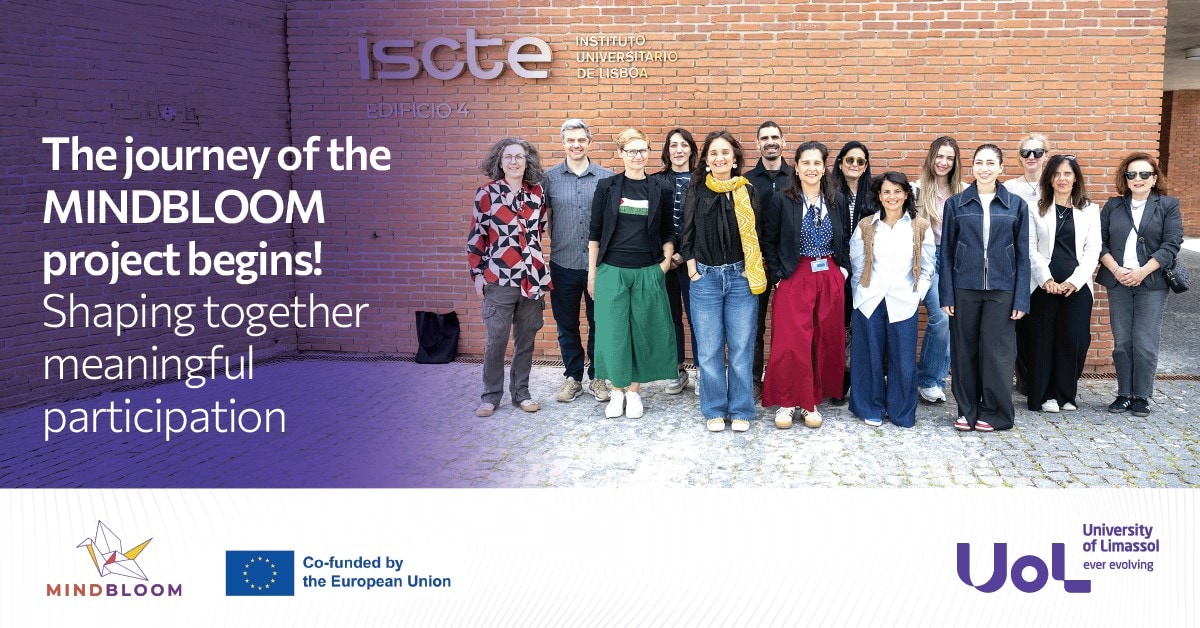
MINDBLOOM - Ψυχική υγεία, ένταξη και δημοκρατική συμμετοχή: είναι ένα διετές έργο (Φεβρουάριος 2026- Ιανουάριος 2028) που αποσκοπεί στην ενίσχυση της δημοκρατικής συμμετοχής των ασυνόδευτων νέων, των οποίων οι εμπειρίες ζωής έχουν συχνά περιορίσει τις ευκαιρίες ουσιαστικής εμπλοκής τους στην πολιτική ζωή.
Δίνοντας προτεραιότητα στη συναισθηματική ευημερία, το MINDBLOOM επιδιώκει να προωθήσει την ενδυνάμωση και την ουσιαστική συμμετοχή των ασυνόδευτων ανηλίκων. Αντί να τους ενσωματώνει απλώς στα υπάρχοντα συστήματα, το έργο επικεντρώνεται στην αναδιαμόρφωση αυτών των συστημάτων ώστε να αντικατοπτρίζουν και να ανταποκρίνονται καλύτερα στις ανάγκες και τις βιωμένες εμπειρίες τους, ενώ ταυτόχρονα δημιουργεί ασφαλείς χώρους στους οποίους μπορούν να συμμετέχουν ενεργά και να αναπτύσσονται.
Πώς μπορεί να επιτευχθεί η ευημερία των ασυνόδευτων ανηλίκων;
Αναγνωρίζοντας ότι οι ασυνόδευτοι ανήλικοι συχνά ξεκινούν το ταξίδι τους έχοντας αντιμετωπίσει τραυματικές εμπειρίες, δύσκολες αποφάσεις, εκτοπισμό και σημαντικές συναισθηματικές επιβαρύνσεις, το MINDBLOOM υιοθετεί μια ολιστική και παιδοκεντρική προσέγγιση για να υποστηρίξει την ευημερία και την κοινωνική τους ένταξη.
Μέσω της εφαρμογής τεχνικών ευαισθητοποίησης σε θέματα τραύματος, δραστηριοτήτων που βασίζονται στο παιχνίδι, διαλόγου και συμμετοχικών προσεγγίσεων με τους νέους, το MINDBLOOM θα τους υποστηρίξει να συν-δημιουργήσουν τις εμπειρίες τους και να γίνουν ενεργοί παράγοντες στη ζωή τους. Ως αποτέλεσμα, οι ανήλικοι θα ενδυναμωθούν ώστε να λαμβάνουν τεκμηριωμένες αποφάσεις, να αισθάνονται ασφαλείς και να αναπτύσσουν μια ισχυρότερη αίσθηση του ανήκειν στις τοπικές κοινότητές τους.
Το έργο MINDBLOOM συγχρηματοδοτείται από το πρόγραμμα "Πολίτες, Ισότητα, Δικαιώματα και Αξία" (CERV) της Ευρωπαϊκής Ένωσης, με έμφαση στα δικαιώματα του παιδιού και τη συμμετοχή των παιδιών, και συγκεντρώνει μια διεπιστημονική κοινοπραξία εταίρων από 4 ευρωπαϊκές χώρες:
- Πορτογαλία: University Institute of Lisbon- ISCTE (συντονιστής), InPulsar- Associação Para o Desenvolvimento Comunitário, Associação das Aldeias de Crianças SOS Portugal, Casa Pia de Lisboa (CPL)
- Κύπρος: Πανεπιστήμιο Λεμεσού (UoL), Hope for Children-CRC Policy Center (HFC)
- Βουλγαρία: Κέντρο για τη Μελέτη της Δημοκρατίας (CSD), RE-ACT
- Αυστρία: InterAktion
Η πρώτη συνάντηση της εταιρικής σχέσης πραγματοποιήθηκε στη Λισαβόνα, στο Πανεπιστημιακό Ινστιτούτο της Λισαβόνας (ISCTE), στις 21-22 Απριλίου 2026. Κατά τη διάρκεια της διήμερης εναρκτήριας συνάντησης, οι εταίροι εξέτασαν την πρόοδο, ευθυγράμμισαν τις προσδοκίες και καθόρισαν τα επόμενα βήματα για την υλοποίηση του έργου.
Πραγματοποιήθηκε επίσης ένα αξιοσημείωτο συνέδριο ανοιχτό στην κοινότητα, με προσκεκλημένους ομιλητές τις Mónica López (Πανεπιστήμιο του Groningen) και Sofie Denise de Smet (KU Leuven). Μέσα από το έργο τους, έφεραν στο προσκήνιο την ανάγκη για μακροπρόθεσμη υποστήριξη των επαγγελματιών που εργάζονται με παιδιά, καθώς και τη σημασία της διασφάλισης της σωστής ενημέρωσης, ακρόασης και ουσιαστικής συμμετοχής των παιδιών. Συζητήθηκε επίσης το σύνθετο τραύμα που βιώνουν τα παιδιά μεταναστών, υπογραμμίζοντας την ανάγκη για προσεγγίσεις με βάση το τραύμα. Το συνέδριο έκλεισε με μια ισχυρή και βαθιά συγκινητική μαρτυρία από έναν νεαρό μετανάστη, ο οποίος αναστοχαζόταν τις εμπειρίες του.
Τα επόμενα βήματα του έργου περιλαμβάνουν το σχεδιασμό και την υλοποίηση εργαστηρίων συν-δημιουργίας με ασυνόδευτους ανηλίκους, επιτρέποντάς τους να συνεισφέρουν ιδέες που θα καθοδηγήσουν τη συνεργατική ανάπτυξη δραστηριοτήτων και μοντέλων με στόχο την ενίσχυση της ουσιαστικής συμμετοχής των παιδιών, με την ευημερία τους να αποτελεί κεντρική προτεραιότητα.
Μείνετε συνδεδεμένοι με το Ερευνητικό Κέντρο του UoL για περισσότερες πληροφορίες σχετικά με τις δράσεις και τις πρωτοβουλίες του έργου.


Χρηματοδοτείται από την Ευρωπαϊκή Ένωση. Ωστόσο, οι απόψεις και οι γνώμες που εκφράζονται είναι αυτές του/των συγγραφέα/ων και δεν αντανακλούν απαραίτητα εκείνες της Ευρωπαϊκής Ένωσης ή της Agência Nacional para a Gestão do Programa Erasmus+ Educação e Formação. Ούτε η Ευρωπαϊκή Ένωση ούτε η χορηγούσα αρχή μπορούν να θεωρηθούν υπεύθυνες γι' αυτές.
 English (UK)
  Ελληνικά