


Accreditations & Recognitions
All programs offered by the University of Limassol are accredited by the Cyprus Agency of Quality Assurance and Accreditation in Higher Education (CYQAA) based on the guidelines and standards provided by the European Network for Quality Assurance (ENQA).
The MBA program is also internationally accredited by the European Foundation for Management Development (EFMD Global).
Furthermore, UoL inherited the following recognitions and memberships from CIIM, which are currently being transferred to UoL.
Our MSc in Financial Services is a Partner of the Chartered Financial Analyst (CFA ® University Affiliation Program).

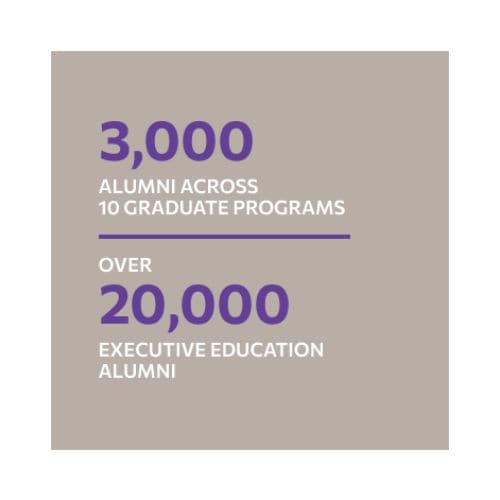

Resource Management and Organizational Behavior has the endorsement of the Cyprus Human Resource Management Association (CyHRMA).
- The CIIM Business School is a member of the Association to Advance Collegiate Schools of Business (AACSB International).
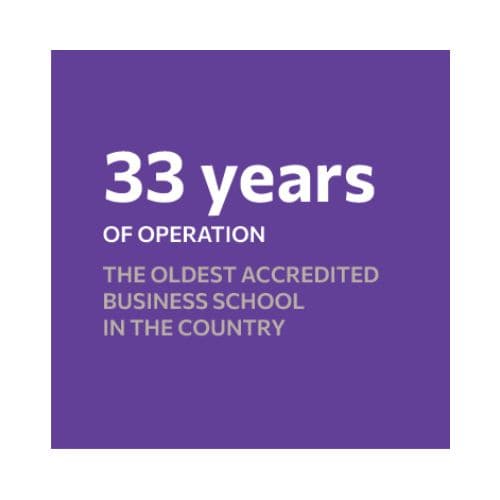
- Our MBA has international accreditation from the Brussels-based EFMD Global-European Foundation for Management Development organization for the past 16 years, and it was the 1st accredited MBA in Cyprus launched in 1990.
- The Technology & Innovation School participates in the Blockchain Technology for Algorithmic Regulation & Compliance (BARAC) Research Consortium, consisting of UCL, the Bank of England, HM Treasury, Barclays Bank, RBS, HSBC, R3 Consortium, British Telecom and ATS, funded by the UK Research Council.
- Holder of the Erasmus Charter for Higher Education 2021-2027 by the European Commission
- Our graduates receive, in addition to their degree, the Diploma Supplement (a model developed by the European Commission, Council of Europe, and UNESCO/CEPES). The Diploma Supplement (DS) is a document attached to a higher degree aiming at improving international transparency and facilitating the academic and professional recognition of qualifications.

Erasmus Policy Statement
UoL offers an ‘international’ education both in program content and instructors with distinguished visiting faculty from around the world. The Erasmus programme supports and strengthens this objective and adds another dimension to this mission with the partnerships with European institutions via the Erasmus programme. UoL is committing to maintain the international elements in its programmes, carefully select its visiting faculty and maintain the founding principles of the organisation.

- Erasmus and Mobility
UoL believes in the invaluable benefits that can be gained from the Erasmus experience, will actively promote the programme and encourage students, faculty and staff to participate in Erasmus. UoL also commits to actively search for more partner institutions and to form bilateral agreements in its efforts to create a wider selection of options when it comes to mobility. This is being set as a priority and is currently being pursued.
- Students
The selection of students in Erasmus exchanges will be based on academic merit, their personal statement of intent that will be required in their application for the programme and their potential to benefit from the programme. The Erasmus Student Selection Committee might conduct a personal interview with candidates to assess the character and commitment of applicant – both for incoming and outgoing students. The student body of UoL includes 22 different nationalities. All programmes at UoL follow the ECTS model and Erasmus students at UoL will be enrolled under ECTS.
UoL supports modernisation in higher education by employing blended learning techniques and by offering an electronic portal and an electronic library to all students.
- Faculty
UoL will promote faculty mobility to its resident faculty. Special priority will be given to attract Erasmus incoming faculty, in order to complement the already strong international faculty profile of the institute. UoL has visiting faculty from over 20 universities from around the world, who are recruited to teach at UoL under a bilateral agreement between the faculty and UoL.
- Staff
Regarding non-academic staff, the institute commits in increasing its co-operation and collaboration with other institutions in order to promote the reciprocal dissemination of best practices in administrative functions in the field of education.
UoL, being a business school, will primarily approach other business schools to become partners or other institutions with a similar profile. The curricula of the partner institutions should either be similar or complement the one of UoL in order for the latter to extend its academic offering.



 English (UK)
  Ελληνικά