





Dr. Kyriaki Mikellidou is an Assistant Professor of Psychology and Quantitative Research Methods at the University of Limassol, specializing in visual perception and cognition in both healthy and clinical populations using virtual reality, psychophysics, and neuroimaging techniques. She holds a PhD in Psychology from the University of York and is a recipient of the prestigious Marie Skłodowska-Curie Individual Fellowship. Her research has been published in high-impact journals and presented internationally, and she currently serves as Editor for Perception and i-Perception.
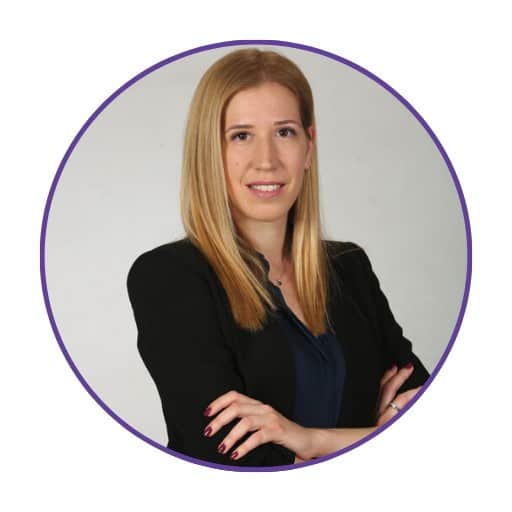
Dr. Maria Vrikki is an Assistant Professor in Education and Psychology (Language Acquisition and Education) at the University of Limassol. She holds a DPhil (PhD) in Education (Second Language Acquisition) and an MSc in Applied Linguistics and Second Language Acquisition from the University of Oxford. Since 2013, she has worked on research projects at the University of Cambridge, the University of Cyprus, and the University of Nicosia. Dr. Vrikki has published extensively in peer-reviewed journals and edited volumes, presented at numerous international conferences, and served as a keynote speaker at the WALS 2023 conference. She is also a collaborator of the CEDiR: Cambridge Educational Dialogue Research group and an active reviewer for several academic journals.

Dr Markella Grigoriou, is a Lecturer at UoL with an interdisciplinary background consisting of a BA in Philosophy from the University of Patras in Greece, an MA in Neuroscience and Philosophy of Mind from the University of Birmingham, and a PhD in Psychiatry (Medical School) also from the University of Birmingham.Her research focuses on the integration of philosophy, neuroscience, neuroimaging and psychology aiming to understand and resolve challenging conditions in mental health such as suicide, extreme psychopathology, and other challenges in early childhood 0-6. Dr. Grigoriou focuses on how to develop and use nonclinical interventions in community, schools, families and public bodies to prevent mental disorders at an early stage. She delivers professional training; parenting education and she develops prevention and intervention programs in clinical and educational settings in Cyprus and the UK.

Antiopi Karamperi, holds a bachelor’s degree in Psychology from Panteion University of Social and Political Sciences and a Master’s degree in Educational Psychology from the University of Limassol (UoL). She is currently pursuing an MSc in School Psychology at UoL and serves as a Research Associate in an EU-funded research project MINDBLOOM: Mental Health, Inclusion, and Democratic Participation: Building a Learning and Outreach-Oriented Model for All Children, which focuses on promoting the empowerment, democratic engagement, and active participation of unaccompanied minors. She has professional experience in the field of domestic violence, with a particular focus on providing emotional support to women and children and supporting the psychosocial rehabilitation of survivors. She has experience in trauma-informed interventions with adult and child survivors of violence. Her research experience encompasses research on the effectiveness of Positive Psychology interventions in patients with artificial hearts, with a particular focus on the longitudinal impact of such interventions on wellbeing. In addition, she has conducted research on emotion recognition and autism-related traits, investigating differences in pupil diameter during the observation of emotional expressions. This work involved the use of eye-tracking systems and experimental software, including “PsychoPy”. Her developing research interests focus on the promotion of wellbeing among children and adolescents, with particular emphasis on prevention and intervention in educational settings through a systemic approach aimed at fostering the flourishing of children and the broader social systems in which they develop.

Theognosia Petrou works as a Project Officer at the Research Center of the University of Limassol. She holds a Bachelor’s degree in Sociology from the University of Cyprus and a Graduate Diploma in Social Anthropology from the University of Auckland in New Zealand. She also holds a Master’s degree in Teaching English to Speakers of Other Languages (TESOL) with Applied Linguistics from the University of Central Lancashire in Cyprus. Theognosia has extensive experience in coordinating and implementing European-funded projects. Her expertise covers a wide range of topics, including social inclusion, gender equality, youth work, migration, and education. She has also coordinated several workshops and engaged with issues related to sexual and reproductive health and rights (SRHR), sexual harassment, volunteering, corporate social responsibility (CSR), and youth engagement. On a voluntary basis, she has delivered experiential workshops in primary and secondary schools in Cyprus on school bullying and healthy relationships. She completed her internship at the European Commission in the Directorate-General for Education and Culture in Belgium. Additionally, she has previously worked as a Youth Worker at the Cyprus Youth Clubs Organisation, a Social Welfare Officer at the Deputy Ministry of Social Welfare in Cyprus, and as an English teacher at a private school in China.


 English (UK)
  Ελληνικά