

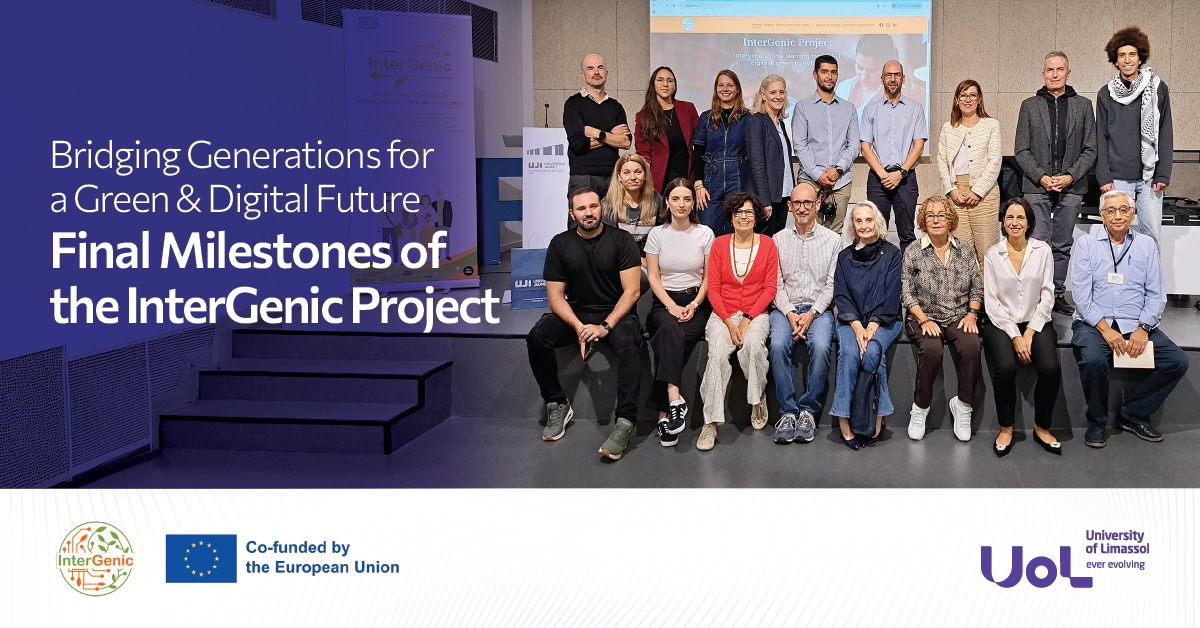
The InterGenic project- “Supporting the EU’s Twin Transitions through Intergenerational Learning, Exchanges of Knowledge, and Joint Actions”, has successfully concluded its two-year Erasmus+ implementation (December 2023-November 2025), delivering a suite of educational resources, community activities, and evidence-based insights that promote intergenerational collaboration and lifelong learning across Europe.
InterGenic, co-funded by the European Union under the Erasmus+ Programme, brought together eight partners from seven European countries, including Universitat Jaume I (Spain) as coordinator, the University of Limassol and Materia Group (Cyprus), InterAktion (Austria), ODISEE (Belgium), DYEKO (Greece), Innovation Education Lab (Romania), and Eurospeak Limited (Ireland).
The project’s central aim was to enhance mutual learning and meaningful cooperation between youth (18-30 years old) and seniors (55+), strengthening digital literacy and sustainable green practices while addressing socio-epistemic gaps between generations.
One of InterGenic’s core deliverables is the training packages co-created with youth and seniors in all partner countries. The training packages for youth mentors and senior mentors focus on topics of mentorship, digital practices and green practices respectively. The content is available in all partner languages.
Another main outcome is the Facilitators’ Handbook for Collaborative Action, a comprehensive methodological guide that supports educators, mentors, and community facilitators in designing, implementing, and evaluating intergenerational learning activities. The handbook outlines a structured 12-step process for facilitators and includes practical tools to encourage active participation and effective evaluation of intergenerational actions. This resource is openly available online and has been widely accessed by practitioners in adult education and community work.
In addition to the Handbook, the partnership has published an Intergenerational Best Practice eBook that captures inspiring stories, pedagogical strategies, and key lessons learned from the intergenerational joint actions implemented across all partner countries. The e-Book serves as an accessible and practical repository of tested approaches for fostering meaningful connections between younger and older generations and supporting lifelong learning in diverse social and educational contexts. To ensure broad accessibility and sustainability, this publication is also available in all partner languages and has been formally assigned an ISBN in every partner country.
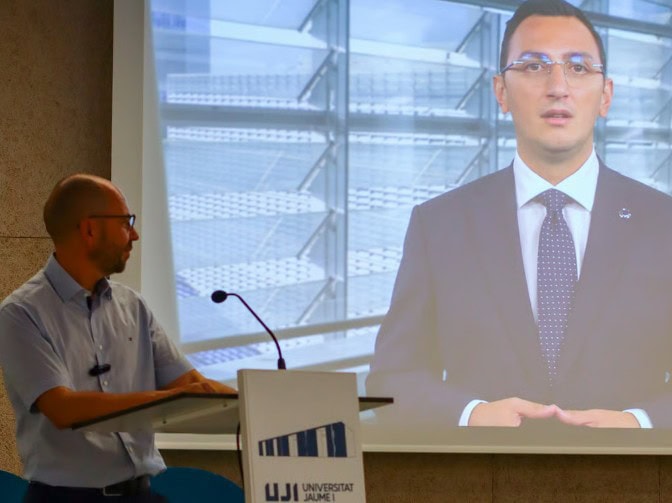
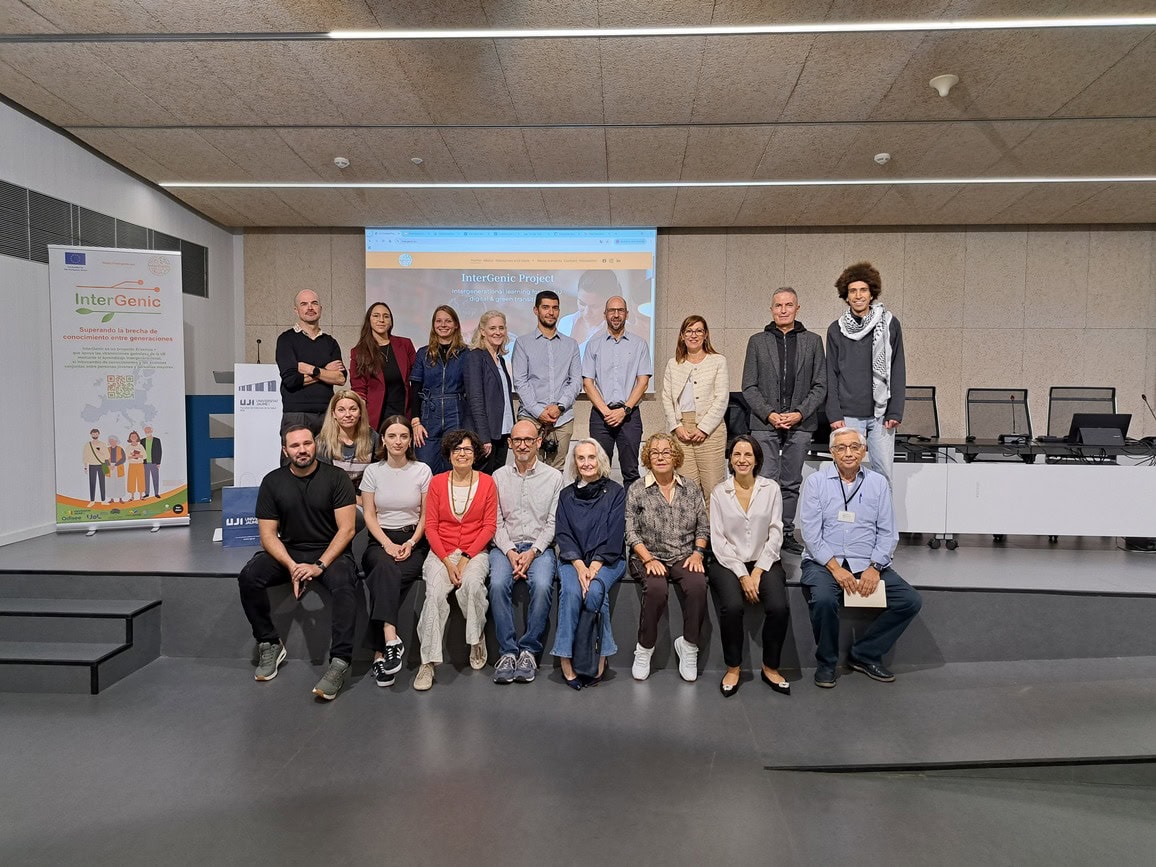
In October 2025, the InterGenic consortium and community stakeholders gathered for the project’s Final Conference, hosted at Universitat Jaume I in Castellón, Spain, marking the culmination of months of transnational collaboration, local community actions, and co-creation workshops. The event brought together (face to face and online) participants from all partner countries, providing a platform to share insights, celebrate intergenerational achievements, and showcase the tangible outcomes of joint actions implemented across Europe. One of the highlights of the conference was a video message of support received from the European Commissioner for Intergenerational Fairness, Youth, Culture and Sport, Mr. Glenn Micallef. In his address, the Commissioner underlined the importance of initiatives such as InterGenic in advancing intergenerational cooperation and aligning community-based action with EU policy priorities, particularly in the areas of lifelong learning, social inclusion, and intergenerational fairness. You can watch the whole video here.
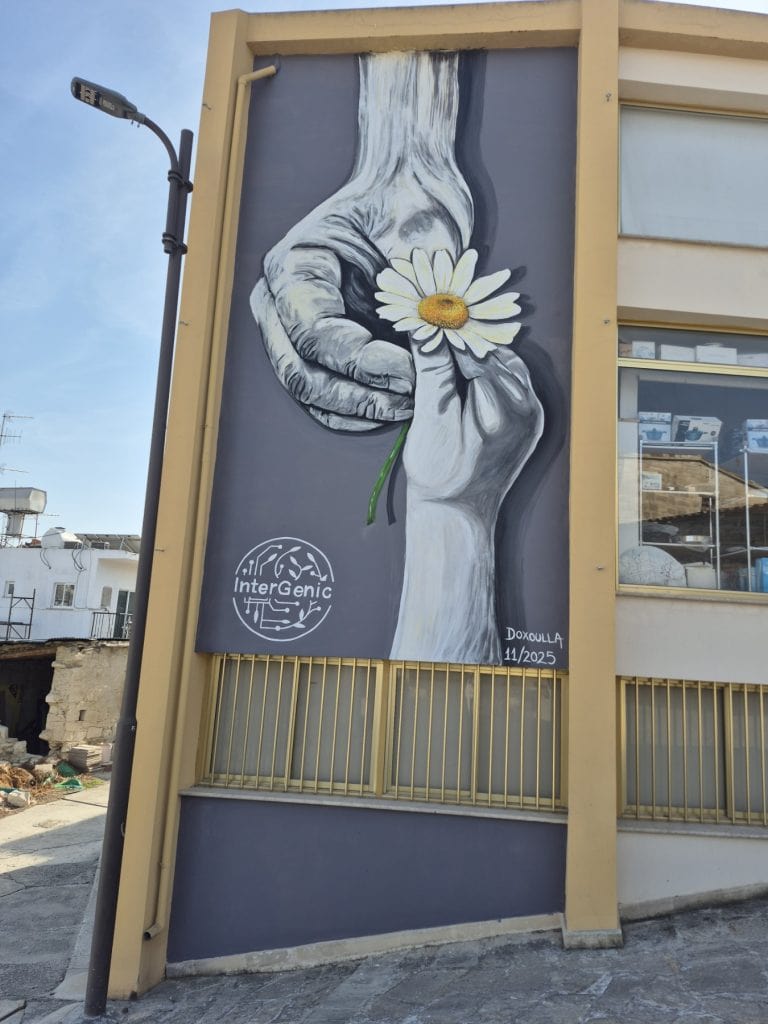
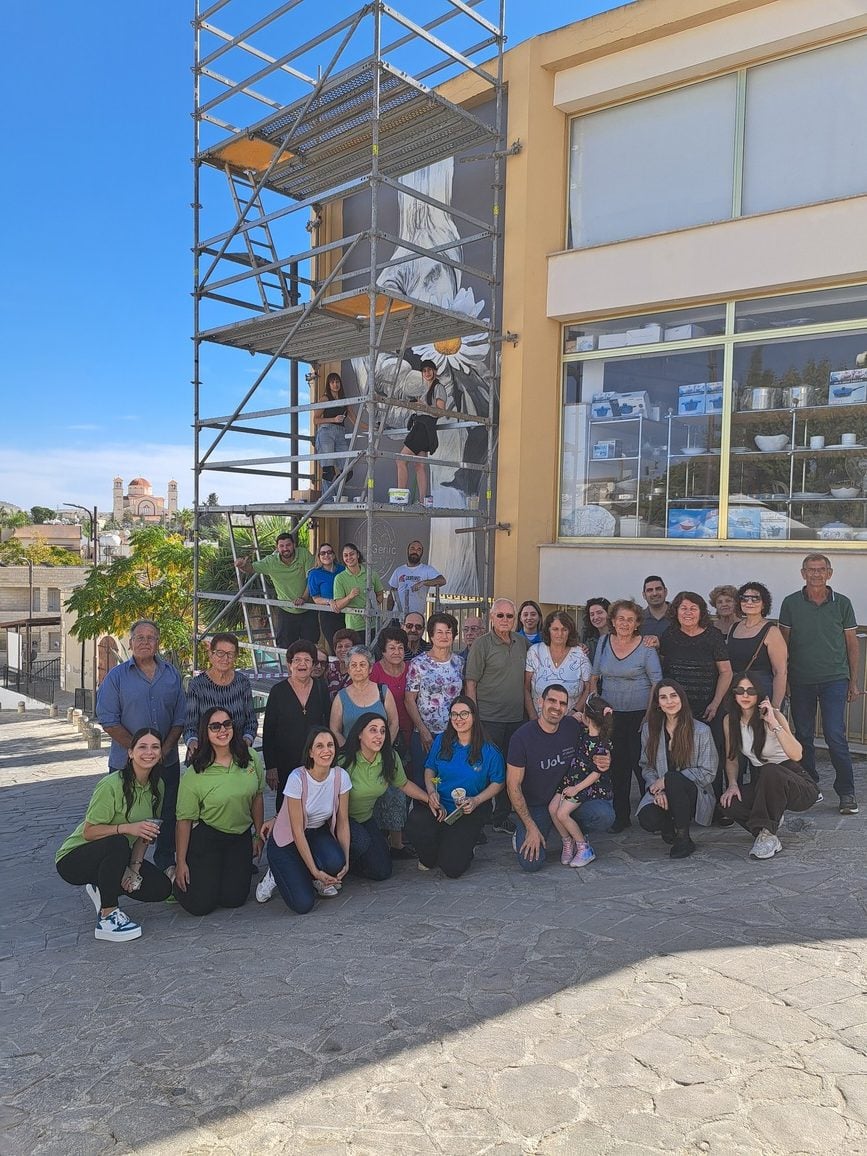
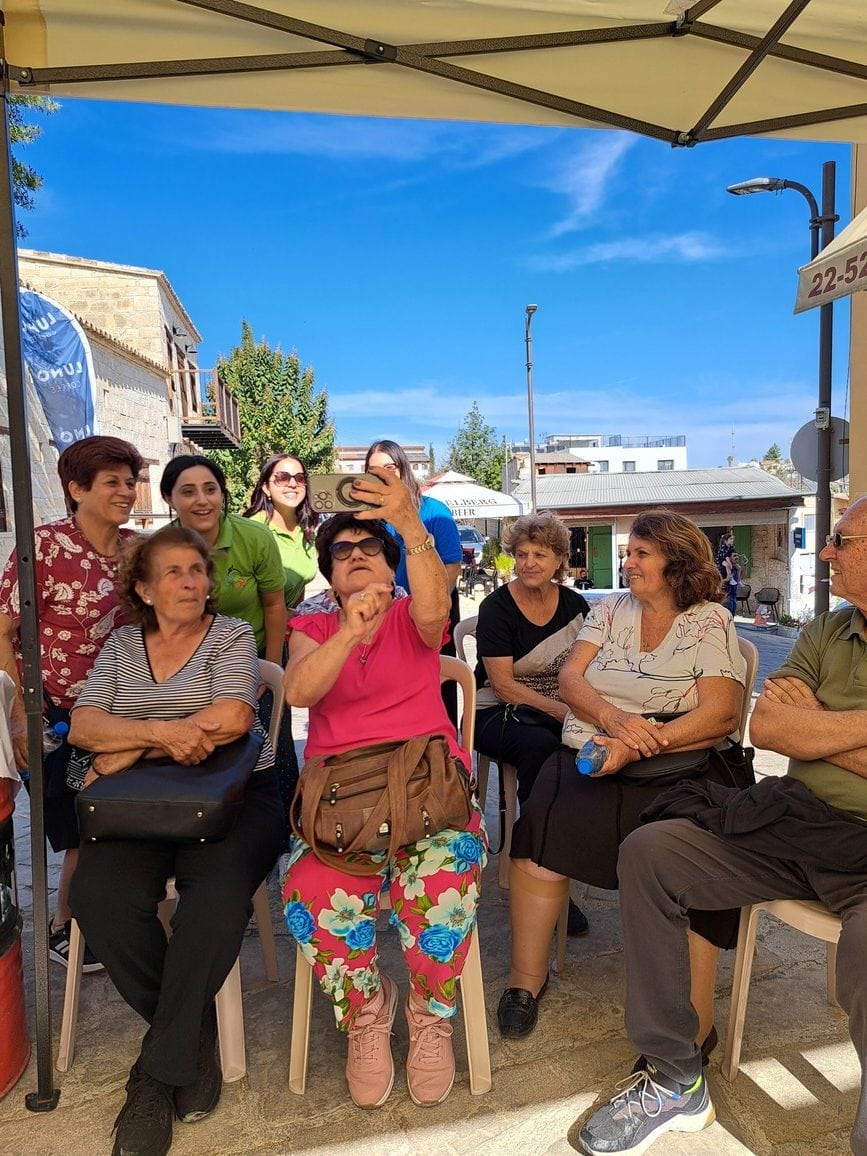
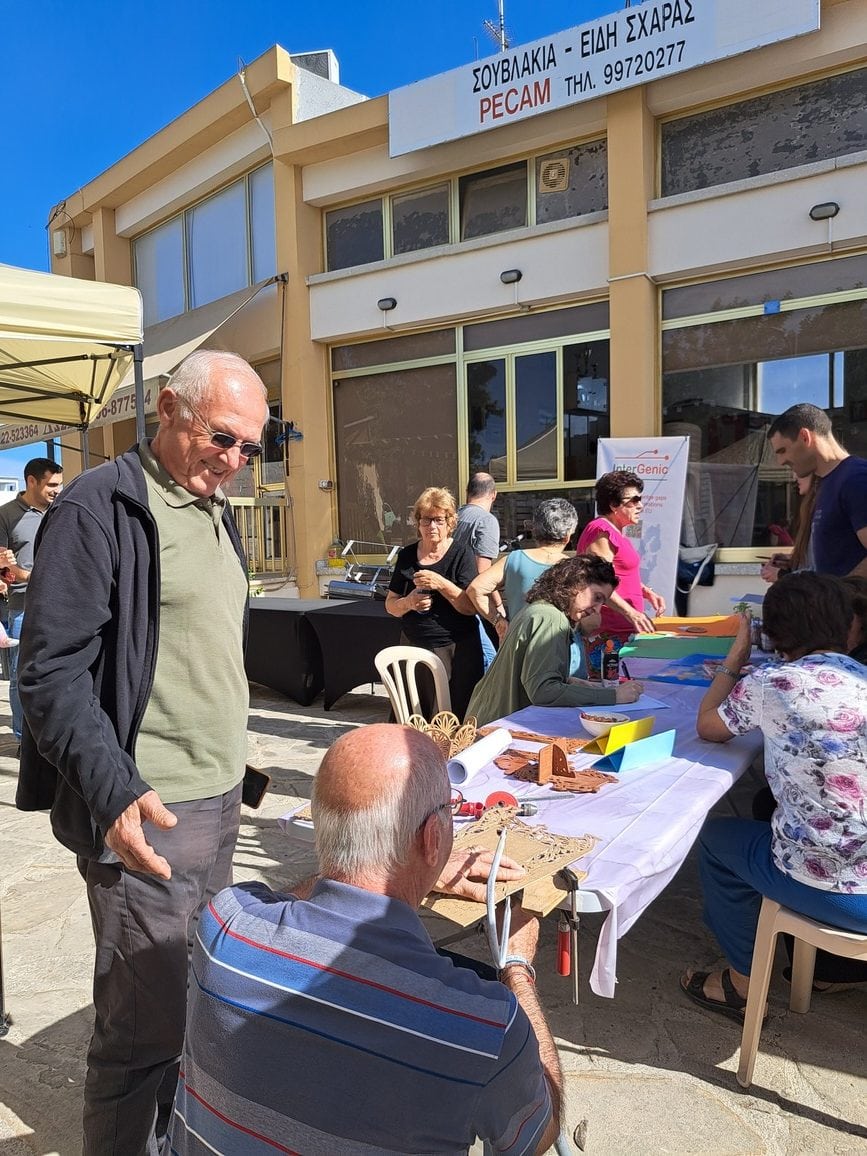
The final InterGenic event in Cyprus, held in November 2025 in Lympia, provided an important opportunity to present and celebrate the actions and results achieved at local level through the collaboration of the University of Limassol, the Materia Group, the United Youth of Lympia, and members of the local community. The event brought together community members, young people, seniors, educators, and local authorities, creating a shared space to highlight the outcomes of the project’s intergenerational actions and their impact on community cohesion and inclusion.
The event was addressed by the Deputy Mayor of Lympia, who warmly acknowledged the achievements of the InterGenic initiatives. Emphasising the importance of strengthening connections between younger and older generations, the Deputy Mayor expressed strong support for the project’s results and reaffirmed the community’s commitment to the development of an Intergenerational Sustainability Center, ensuring long-term impact beyond the project’s duration.
Testimonies shared during the event from seniors and young people who participated in the local activities, highlighted the value of intergenerational cooperation, shared learning, and mutual support. Interactive workshops, implemented in collaboration with the “Panton Hara” organisation, also contributed into creating a shared space. Participants also danced, shared limericks and finalised a collaborative graffiti artwork which will be sustained as a reminder of the project implementation in the community.
In an era of rapid digital transformation, such human-centred encounters and initiatives reaffirm that strong intergenerational relationships are fundamental to mental resilience, well-being, and sustainable cognitive and psychosocial development.
As the project concludes, partners are committed to ensuring long-term accessibility of all tools and resources. Training packages for youth and senior mentors, the Facilitators’ Handbook, and the intergenerational best practice e-Book remain openly available for use in local, national, and European adult education contexts. Overall, InterGenic has demonstrated the transformative potential of intergenerational learning as a driver of community innovation, digital inclusion, sustainable practice exchange, and lifelong learning.
The University of Limassol extends its sincere thanks to all individuals, organisations and the partnership who supported the project and contributed their time, knowledge, and ideas to creating meaningful and lasting outcomes in the field of adult education.
For the project resources follow the link below:
Website of the project: https://intergenic.eu/
InterGenic training packages and tools: https://intergenic.eu/resources-and-tools
Facilitators’ Handbook in SALTO- YOUTH net- Toolbox: https://www.salto-youth.net/tools/toolbox/tool/facilitators-handbook-for-collaborative-action-for-intergenerational-learning.4789/

Co-funded by the European Union. The opinions and views expressed are solely those of the author(s) and do not necessarily reflect those of the European Union or the Spanish Service for the Internationalisation of Education (SEPIE). Neither the European Union nor the granting authority can be held responsible for them. Project Number: 2023-1-ES01-KA220-ADU-000155225
 English (UK)
  Ελληνικά