


The #WorldCaseTeachingDay – February 7th – reminds us why the case method is uniquely positioned to create value in higher education. Tested for over 100 years, it has proved its effectiveness in three dimensions: transferring knowledge, advancing skills, and guiding students in their self-development, – the latter remains even more relevant and vital today, in the new age of AI.
The case method is continuously evolving, and one such direction is experiential learning via Live Case Projects (LCPs). At the University of Limassol, we are embracing this innovative pedagogical method following the best practices from the leading business schools globally.
As emphasized by education consultant Svenia Busson in a recent HBP article, students today “need to be adaptable problem solvers, effective collaborators, and lifelong learners. Employers seek candidates who demonstrate strong critical thinking and communication over traditional competencies, yet these softer skills aren’t consistently taught at institutions that prioritize a top-down model of professor-led learning.”
We define an LCP as a project-type academic course or element of a course in which students are introduced to a current real-life business challenge presented to them by the managers of a company. Such projects may also be called ‘client-based’ or ‘client-sponsored’ projects and may form a part of a traditional academic course. In an LCP, students:
- Work in teams over a minimum period of two weeks
- Work under the guidance of an academic advisor
- Have an opportunity to interact with an industry mentor
- Develop solutions to the company’s “live” business problem(s)
- Present solutions to decision-makers
In Figure 1, we contrast learning with Live Case Projects versus learning with traditional cases (case studies).

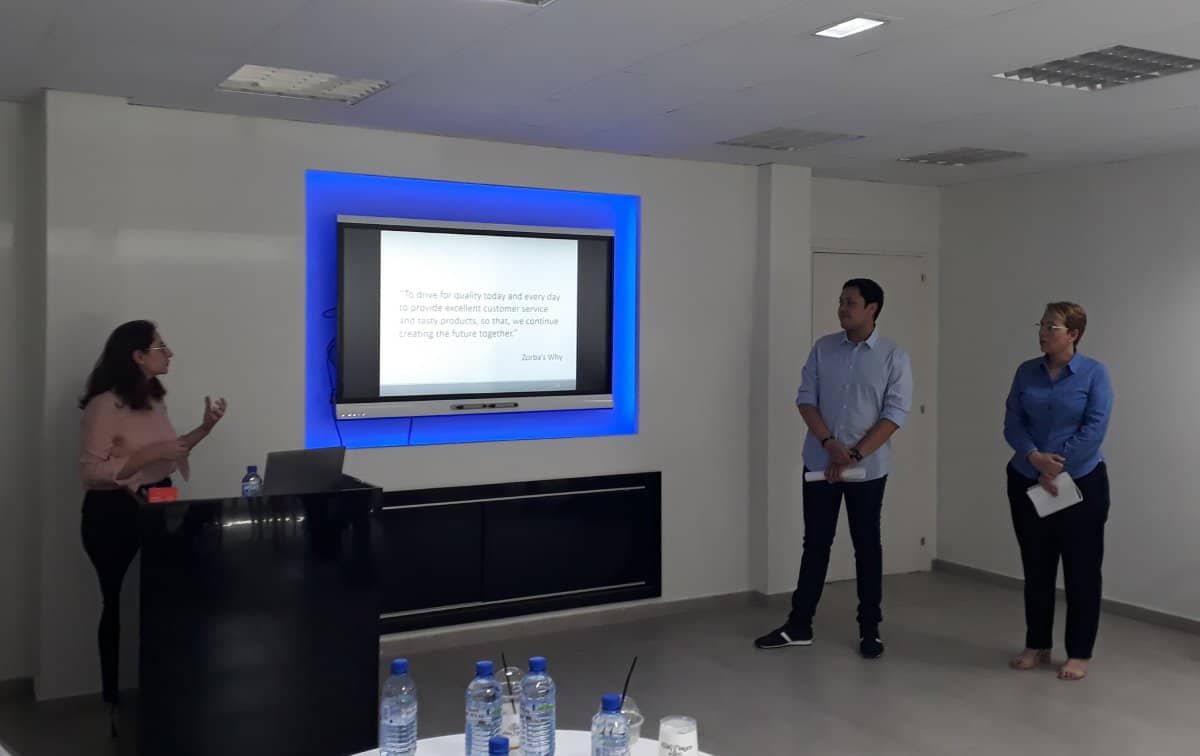
Personally, I have been running an annual LCP for my business students for 7+ years and have witnessed first-hand its multiple benefits (see Figure 2).

Over the past year, I have been involved in educational research aimed at gaining a deeper understanding of LCPs. We are an international group of faculty and industry professionals who are keen to gather international data on the effectiveness of LCPs. Our preliminary findings were presented at the 2023 conference of the North American Case Research Association in San Antonio, TX (see Figure 3 as a quick glimpse into students’ perspective on LCPs).
My appreciation goes to my esteemed colleagues in this international research project: Dr Anna Czegledi, Professor, Conestoga College, Canada; Michele M. McGowan, DBA, Professor and Graduate Program Director, Healthcare Administration, The William G. McGowan School of Business, King’s College, Wilkes-Barre, PA, USA; Dr Sonia Mehrotra, Professor & Head – Centre of Excellence for Case Development, S.P. Mandali’s Prin. L.N. Welingkar Institute of Management, Development, and Research, Bengaluru, India; Vania Sakelaris, MBA, Founder/ Principal, VAS & Associates Inc., Canada.

About the author:
Dr Olga Kandinskaia is Associate Professor of Finance & Director of MSc in Green and Digital Management at University of Limassol, Cyprus https://www.uol.ac.cy/ . She is also currently the President of NACRA (North American Case Research Association) https://nacra.net/ . Dr Kandinskaia has 30 years of experience in business management education. She is a case writer, with 14 cases published in peer-reviewed case journals and 4 case-writing awards. In her role as MSc Program Director, Olga has gained extensive experience in running live case projects at CIIM – international business school in Cyprus, now part of the newly-formed University of Limassol. Dr Kandinskaia’s “Learning by Doing” innovative teaching methods in business education received Silver and Bronze Awards by Cyprus Education Leaders Awards 2020.


 English (UK)
  Ελληνικά